Governor Ohan
The Deer KingGovernor Ohan is the Zolian governor of Ohan Province, the former Kingdom of Aquafa under imperial rule. A powerful and often arrogant ruler, he is also a patient of Otawalle medicine: Hohsalle has saved his life, giving their relationship unusual force in a court where priest-doctors object to the physician’s influence. Ohan’s rule brings imperial frontier policy into the novel’s intimate crises of illness and survival, while his concern about the western border reveals the pressures shaping Zol’s hold over Aquafa.
Identity and Position
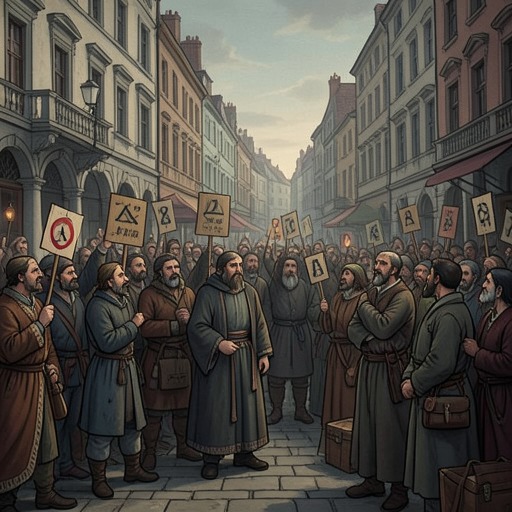
Ohan governs the province created when Aquafa became part of the Zolian Empire. Aquafa had negotiated its incorporation in a way that preserved its people’s status as ordinary citizens, but the mountain clans of Toga were not recognized as Aquafaese under the new regime. Though they spoke Aquafa’s language and had defended its borders, Zol treated them differently from the settled population. Ohan’s office therefore sits within an imperial order whose citizenship distinctions have direct consequences for the people living at its frontier.
The contrast is especially stark in the mountains. Zolian policy relocated lower-caste populations to other conquered territories; without ordinary-citizen status, the Toga clans faced removal from their homeland and life in unfamiliar surroundings. The Gansa leaders devised a strategy of feigned resistance, hoping to persuade the empire that the clans’ knowledge of the mountains made them useful as allies and as a buffer against Mukonia. The Lone Antlers provided the warriors for this show of resistance. Ohan is not shown personally designing that policy, but he governs the province within the system that makes the clans’ uncertain status and threatened displacement possible.
Hohsalle and the Authority of Medicine
Ohan’s dependence on Hohsalle is grounded in a prior rescue. The governor had already been saved by the physician, and during his recovery he attributed Hohsalle’s presence at his time of need to divine intervention. The intensity of his gratitude contrasted with his public reputation for arrogance and greed. His ministers, had they heard the remark, would have been astonished; the scene makes plain that practical knowledge and personal vulnerability can unsettle the usual hierarchy of the court.
That trust gives Hohsalle a position of influence despite protests from priest-doctors. Ohan appointed him to posts of confidence because he knew who could help when illness struck. Emperor Natalu likewise respected Limuelle after Limuelle saved the emperor’s wife, establishing a parallel in which the rulers’ reliance on Otawalle physicians overcomes institutional suspicion. For Ohan, Hohsalle is not simply a court appointee: he is the person whose skill has already proved essential to the governor’s survival.
Black Wolf Fever and the Governor’s Decisions
When Black Wolf Fever becomes a concern, Ohan takes the threat seriously even before he is close to the investigation. His son Yotalu reports that Ohan and Utalu have set out for a conference with the emperor in the capital, but have not yet traveled far from Kazan. In a message to Yotalu, they warn that a mistake in handling the disease could bring disaster and urge him to consult Hohsalle. Their response shows that the governor understands the outbreak as more than a local medical problem: mishandling it could endanger the wider realm.
Hohsalle, in turn, has held back from notifying the Sacred Territory until he has Ohan’s permission. He is concerned that news of the disease might cause public panic and leave the realm vulnerable to invasion, but also recognizes the need for Otawalle expertise. Yotalu welcomes that assistance, reporting that Ohan’s adviser Lona agrees with consulting Hohsalle. The episode places Ohan’s authority within a chain of decisions shared with his son, advisers, and the physician, rather than depicting him as acting alone.
Later, Ohan asks Hohsalle whether infected animals can be cured. His face is pale, and his eyes show anxiety as he listens to the answer: no cure has yet been found. The salt-mine crisis, however, has provided samples of the disease agent, and medical teams are pursuing three lines of work: a weakened infectious agent intended to strengthen resistance, substances such as lichens to suppress the agent, and a serum made from components produced by infected patients. Ohan’s question and visible concern make his reliance on medical knowledge recur at a larger scale: the physician who once saved him is now explaining the uncertain prospects of protecting the population.
Frontier Security and Imperial Administration
Ohan’s political attention turns toward the border with Mukonia. He has become intent on building up the military, reportedly believing that Zol should demonstrate its ability to defend the western frontier and push beyond it. The emperor, by contrast, is said to have little interest in further westward expansion. The difference reflects competing assessments of danger: Ohan is concerned by movements along the Mukonian border, while the emperor’s resources are strained by an intensifying conflict on Zol’s southern frontier and are being directed toward that existing war.
The governor’s security concerns coexist with the empire’s broader methods of settling conquered territory. Zolian frontier settlers—poor farmers and herders from the edges of the realm—are ordered to establish communities in newly acquired lands, cultivate Zolian crops and livestock, build towns in Zolian fashion, and mingle with native populations. They form an unarmed vanguard for transforming territory into a Zolian society. Lower taxes and ownership of cleared farmland offer advantages to some settlers, but displacement from their original homes leaves many grieving their inability to return. Ohan’s province is thus shaped both by the military frontier he wants strengthened and by a gradual process of demographic and administrative change.
Rule, Records, and Family
Ohan’s family is part of the provincial power structure. Yotalu, his son, manages the response to the outbreak and consults Hohsalle; Utalu, Ohan’s eldest son, travels with him toward the imperial capital. The family’s decisions connect the governor’s court to both the emperor’s conference and the immediate local emergency. Ohan is subsequently present with Yotalu at Utalu’s funeral, where Hohsalle arrives to pay his condolences.
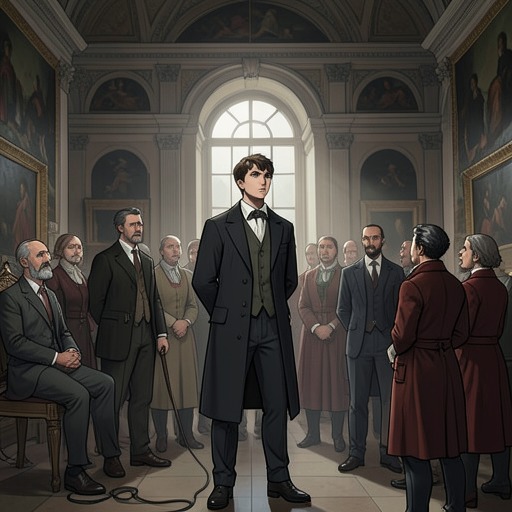
After the funeral, Ohan summons Hohsalle to the palace audience chamber. The King of Aquafa sits opposite the governor, Yotalu is seated at Ohan’s left, senior statesmen line the room, and Tohlim stands among the attendants behind the king. Ohan’s expression is unusually tempestuous. He thanks Hohsalle for saving his grandson, a moment that links the physician’s earlier rescue of the governor to another act of care within the family. The formal gathering also places Ohan’s household and the Aquafaese king in the same political room, against the visible presence of the Pure Heart Creed’s teachings.
Yotalu’s knowledge of the province’s tax system later offers Hohsalle a practical way to search for Van. Collection officers record even nomadic groups in outlying areas such as the Oki Valley and Toga Mountains, categorizing populations and keeping counts of residents and ages. Yotalu acknowledges that people sometimes hide in the woods when tax officers visit, which helps explain the difficulty of finding Van, but argues that the information is still broadly accurate. The exchange reveals how the same administrative reach that serves taxation can also provide information useful to an urgent search. Ohan is not the speaker, yet the system of rule attached to his governorship becomes a consequential resource in the story.
Character and Narrative Significance
Ohan is presented through contrasts rather than through a private account of his rule. His reputation for arrogance and greed sits beside his abasement before Hohsalle after being saved; his drive to strengthen the western frontier sits beside an empire whose attention and resources are pulled elsewhere. As governor, he represents the practical authority of Zolian rule in Aquafa, including its unequal treatment of mountain communities and its capacity to register distant populations. As a patient and grandfather, he also appears vulnerable to illness and loss, and willing to acknowledge a debt to the person who can help.
These contrasts give Ohan a role at the intersection of governance and care. His decisions matter to the handling of Black Wolf Fever, yet the knowledge needed to confront it lies with a physician whose authority is contested by established religious medical institutions. His relationship with Hohsalle makes that tension personal, while his border policy and provincial administration show its political setting: rule depends on military calculation, settlement, records, and the expertise the state cannot supply for itself.